Fast Food.
Slow Systems.
That Is Where Most QSR Chains Quietly Break.
The product is not the problem. Most QSR chains that plateau do so because the operation behind the product — the inventory controls, the data infrastructure, the menu architecture, the loyalty layer — was not built to keep pace with the ambition. This page is for the operators who recognise that gap and are ready to close it.
A perspective for operators building durable, scalable QSR chains
The QSR model is operationally ruthless. The numbers explain why.
Quick service sounds simple. High volume, tight menus, fast turnaround. In practice, it is one of the most operationally demanding formats in hospitality — and the one where operational failure is most visible to the guest.
“The limited-service restaurant segment is projected to reach $532 billion in sales in 2025 — yet 80% of operators report rising food costs and 90% rising labour costs year-on-year. The market opportunity is real. So is the operational pressure compressing the margin available to capture it.”
Operating at QSR pace already?
Speak with an operations specialist who works with QSR chains at your stage of growth.
It’s rarely a product problem. Almost always an operations one.
Five operational domains where the gap between a QSR brand’s ambition and its day-to-day reality quietly widens — and compounds with every new location opened on top of an unresolved foundation.
Operations & Consistency
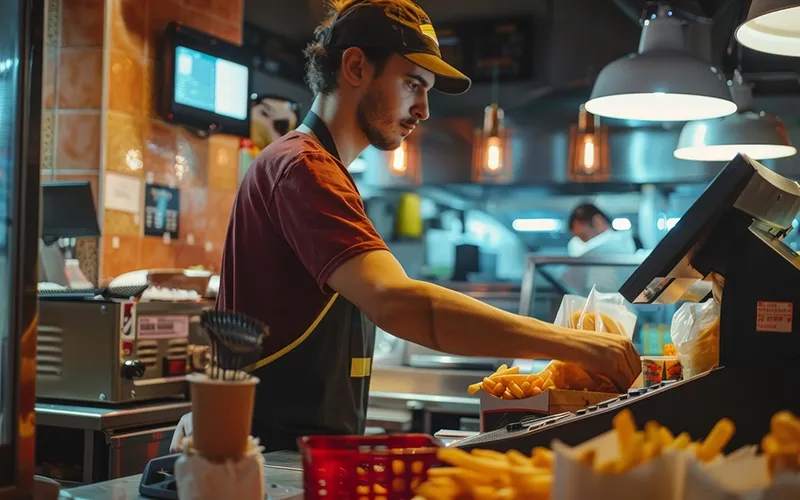
The QSR format is built on a promise: that the guest experience at any location is the same as at any other. That promise is delivered operationally — through standardised workflows, consistent preparation, and the same POS behaviour at every terminal. When those systems are not unified, the promise degrades in proportion to the number of locations. Staff turnover at 78% means the person who opened your second-best outlet last year may not be there to open your next one. Without systems that enforce consistency regardless of who is on shift, quality becomes a function of tenure, not process.
- Each location builds local workarounds that diverge silently from SOP — invisible until a customer complaint or an audit surfaces them
- Menu changes pushed manually to 30+ outlets create a window where different versions run simultaneously
- Void, discount, and override behaviour varies by outlet and by manager, with no real-time detection mechanism
- New location onboarding time extends when the operating model exists in a manual rather than a platform
- High turnover means continuous training load — which only compounds when the training programme is not systematised
Inventory & Supply Chain
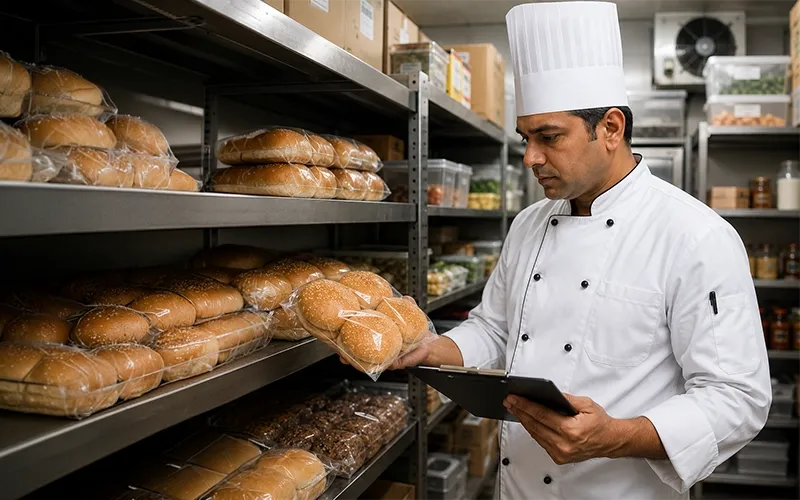
QSR margins are thin by design — the model trades margin per unit for volume. That trade only works when food cost is tightly controlled across every outlet. But tight control requires real-time visibility into what is being consumed versus what is being sold, at every location, every day. Most chains do not have it. Supply chain complexity compounds at scale. Multiple suppliers, regional pricing variation, inter-outlet transfers, and perishable inventory all create a landscape where manual management is both time-consuming and structurally imprecise. The damage accumulates before it appears on the P&L.
- No live stock visibility across locations — purchasing decisions made on last week’s count, not today’s position
- Recipe adherence impossible to enforce remotely without ingredient-level digital tracking
- Supplier pricing inconsistency across regions goes undetected without centralised procurement data
- Inter-outlet transfers undocumented, creating phantom variance in both sending and receiving locations
- Manual reordering reactive rather than triggered by par levels — leading to emergency orders at premium cost
Menu & Pricing Control
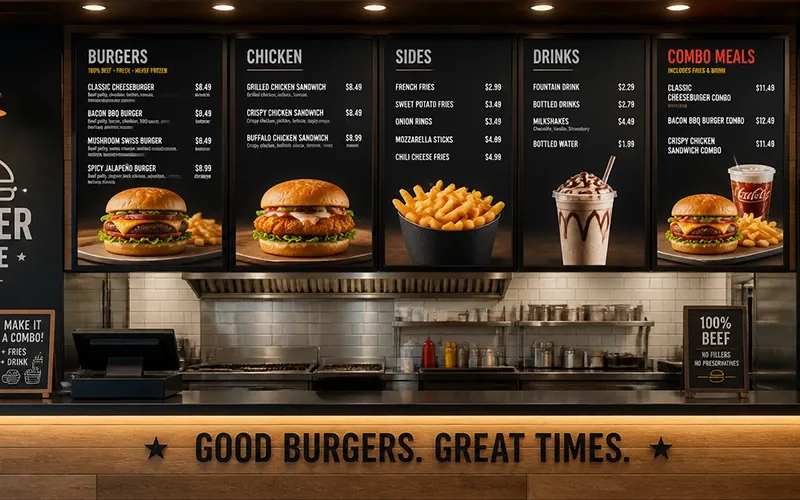
In QSR, the menu is not just a list of products — it is a margin management tool, a demand signal, and a brand communication. At scale, that document needs to be live, consistent, and centrally controlled across every channel and every outlet simultaneously. For most growing QSR chains, it is none of those things. Digital ordering now accounts for 42% of global QSR sales. Each digital channel — in-store kiosk, delivery aggregator, mobile app, drive-thru display — requires its own menu feed. Without centralised architecture, every price change and every new item launch requires a manual update across multiple platforms, with the window for inconsistency growing proportionally with the number of channels.
- Menu changes require individual manual updates across every aggregator — taking days and introducing version inconsistencies
- Kiosk, delivery, and counter menus fall out of sync the moment a POS update is made
- Regional pricing cannot be managed by cluster — requires outlet-by-outlet changes that do not scale
- Limited-time offers and promotional pricing cascade unevenly across platforms when applied by hand
- Dead-margin items remain on the menu because there is no data infrastructure to remove them with confidence

Analytics & Decision Making
The pace of QSR operations means that decisions deferred are decisions missed. A peak-hour staffing miscalculation is not recoverable at 1pm if the data that would have informed a better decision arrives at 9pm. A food cost variance that accumulates across three locations for two weeks is not a minor correction by the time it shows up in the month-end P&L. Data fragmentation is the root cause of most QSR decision-making failures at scale. When POS, inventory, delivery platform, loyalty, and labour data all live in separate systems, the information that should drive action arrives late, in incompatible formats, and requires manual reconciliation before it is usable.
- No live estate-wide dashboard — performance visibility requires manually exporting and merging multiple sources
- Delivery platform sales reconciled against POS by hand — slow, error-prone, and always behind
- Peak-hour analytics retrospective rather than predictive — staffing decisions lag the data that should inform them
- Location benchmarking unavailable without manual consolidation — underperformance identified late
- No single metric connecting food cost, labour cost, and transaction volume in real time

Customer Experience Consistency
Speed, accuracy, and the ability to recognise a returning guest are the three pillars of QSR customer experience. None of them are marketing decisions. All three are operational ones. And all three degrade in the absence of unified infrastructure. The loyalty gap is where most QSR chains leave the most value on the table. 54% of customers prefer brands where they are loyalty members — but most QSR loyalty programmes are structurally disconnected from the transaction, accruing points through a separate app that most guests use inconsistently and most staff cannot support at the counter.
- Loyalty points earned in-store not reflected in the delivery app, and vice versa — the programme cannot deliver on its promise across channels
- Member tier management enforced manually at the counter, creating friction that deters redemption
- App orders not routing to kitchen display in real time, creating queue confusion during peak periods
- No connection between guest satisfaction data and operational metrics — impossible to trace experience failures to their root cause
- Wait time variance by location and by shift, with no predictive staffing mechanism to address it before it affects service
Every operational constraint has a technology counterpart. Here is the map.
Not a feature catalogue. A challenge-to-capability translation — showing precisely how each of the five struggle domains is addressed when the operational infrastructure is unified.
Workflows that drift outlet-to-outlet, override behaviour that varies by manager, menu changes that propagate over days. At 78% staff turnover, every consistency capability that lives in an individual rather than a system breaks roughly every fourteen months.
A single POS platform across every outlet means every workflow, every modifier, and every override rule is identical at every terminal. Menu and pricing changes deployed from head office propagate in under two minutes. Role-based access ensures only authorised personnel can apply discounts, voids, or price adjustments — every exception logged in real time. Centralised menu management, role-based access from counter to HQ, real-time void/discount monitoring with threshold alerts, and offline mode with automatic sync keep service continuous even when connectivity drops. New location onboarding inherits the operating model from day one.
End-of-week stock counts that surface variance too late, recipe costing that lives outside the purchasing flow, inter-outlet transfers that go unrecorded, and reordering that reacts to stockouts instead of triggering on par levels.
Every transaction automatically deducts the exact ingredients consumed from stock at every outlet. Every recipe is costed at the ingredient level, and the actual versus theoretical usage gap is visible daily — not monthly. Centralised purchasing has live visibility into stock positions across all locations before a PO is raised. Daily waste and variance reports by outlet, ingredient, and daypart. Automated reorder triggers by par level eliminate emergency orders at premium cost.
Separate menus per aggregator, kiosk and drive-thru content drifting out of sync the moment the POS is updated, regional pricing that requires outlet-by-outlet edits, and LTOs that cascade unevenly when applied by hand.
One master menu drives every channel simultaneously — counter POS, kiosk, delivery aggregators, mobile app, drive-thru display boards — updated from a single interface at head office. Aggregator sync keeps Swiggy, Zomato, Uber Eats and others in step with the master. Cluster pricing allows regional price variation managed centrally, not outlet by outlet. LTOs deploy across every platform at the same moment. Menu engineering reports surface the margin and volume data to drive commercial decisions with evidence.
POS, inventory, delivery, loyalty, and labour data living in separate systems. Reporting arrives after the shift is over, in formats that require manual reconciliation. Peak-hour decisions lag the data that should inform them.
200+ live reports across every outlet — revenue, food cost, transaction volume, product mix, peak-hour traffic, delivery channel split, loyalty redemption — all updating in real time without manual export or consolidation. A COO can compare any two outlets on any metric, live, from a mobile device. Peak-hour analysis identifies high-volume windows so staffing can be set before the rush. Scheduled report delivery to any recipient automatically — no manual pulling required.
Loyalty programmes that accrue in a separate app most guests use inconsistently. Member tiers enforced manually at the counter. Delivery and app orders that earn no points. Guest data disconnected from operational metrics, making experience failures untraceable.
Loyalty integrated directly into the POS — not a separate app layered on top. Points accrue across every channel automatically: counter, kiosk, delivery, and mobile app. Member tiers enforced at the point of sale without staff intervention. Personalised promotions triggered by actual purchase behaviour, not manual segmentation in a disconnected CRM. CRM segmentation by purchase behaviour, visit frequency, outlet, and spend tier — and a feedback loop that connects guest satisfaction scores to operational metrics by location.
Want to see how this maps to your operation specifically?
We’ll benchmark your current setup against what the best-performing QSR chains at your stage of growth are doing differently.
What it actually takes to build a QSR chain that holds its shape at scale.
Build the operating model before you build the next location.
The most expensive operational mistake a growing QSR chain makes is opening new locations before the operating model is stable enough to replicate. Each premature location adds a local variation that has to be corrected retroactively — at increasing cost and disruption as the chain grows. Standardisation in QSR is not a constraint on growth. It is the prerequisite for it. A chain that can replicate its best outlet reliably, at speed, in any market, has a structural advantage that no menu innovation or marketing budget can substitute for. Build the platform first. The locations will scale faster for it.
Stabilise the operating model →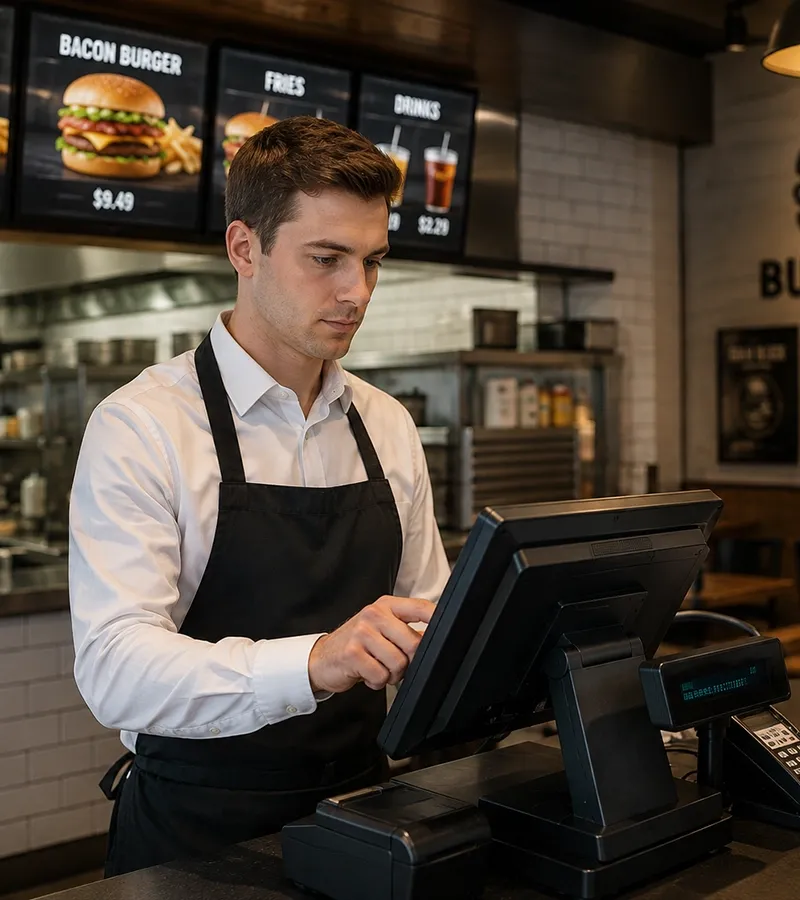
Treat staff turnover as a systems design problem, not a people management one.
At 78% annual turnover, every operational capability that lives in a person’s head rather than a system is a capability that has to be rebuilt every fourteen months. The QSR chains that manage turnover best are not the ones that retain staff longest — they are the ones that have designed operations so that the system carries the institutional knowledge, not the individual. Unified POS, standardised KDS workflows, role-based access, and digital training integration all reduce the operational cost of turnover. They do not eliminate it. But they make each departure significantly less disruptive than it would be in a manually-managed operation.
Design for turnover →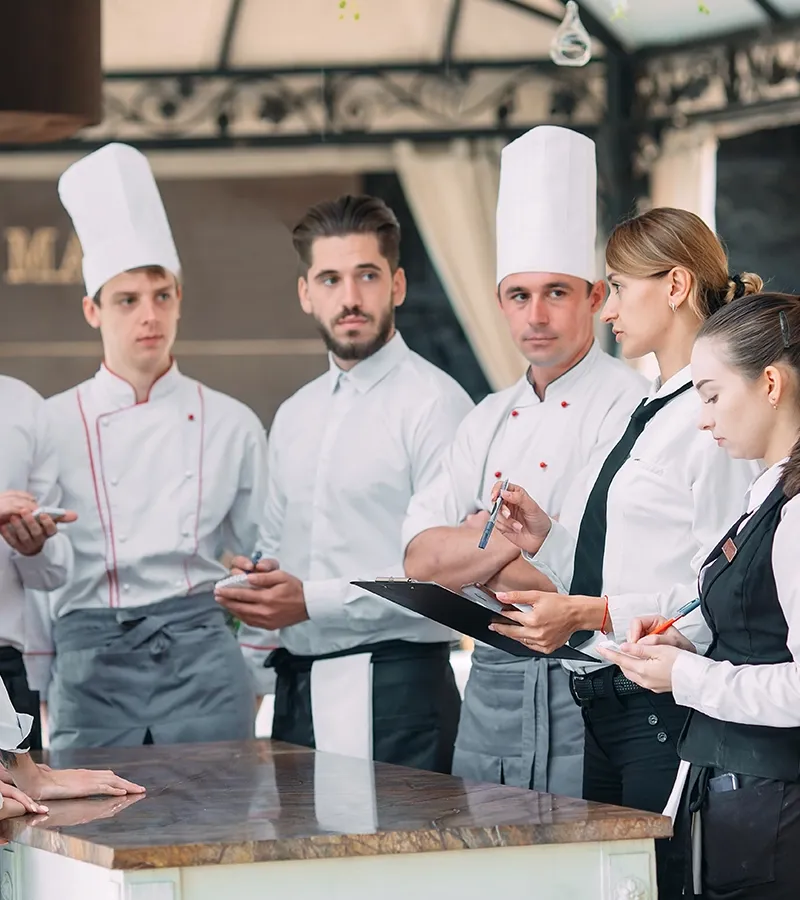
Own your digital channels. Don’t be owned by them.
Delivery aggregators are a distribution channel. They are also a margin compressor, a data barrier, and a pricing constraint when a QSR chain does not have the infrastructure to manage its menu and guest data independently of them. The chains that use aggregators most effectively treat them as one channel among several — not as the primary interface between the brand and the guest. First-party digital infrastructure — own app, direct QR ordering, first-party delivery — is not just a lower-commission alternative to aggregators. It is the mechanism through which guest data is owned, loyalty is built, and menu authority is retained. The investment compounds with scale.
Map your channel strategy →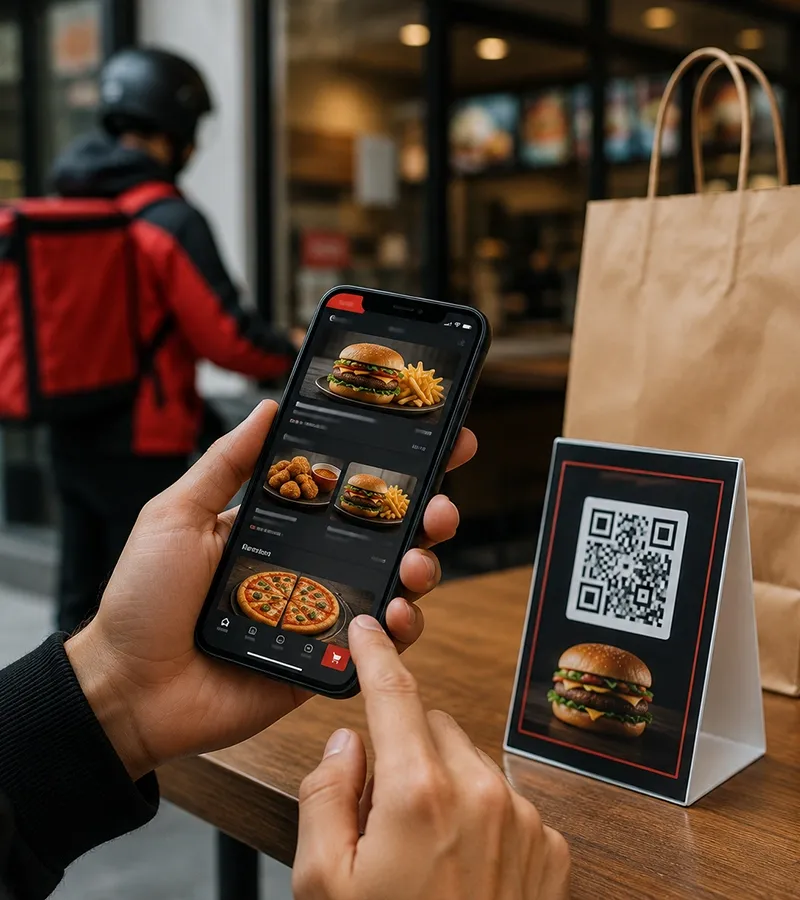
Make the data work in real time or accept that decisions will always lag reality.
The operational pace of QSR is incompatible with reporting cycles measured in days. A peak-hour staffing failure, a food cost variance, a kiosk conversion drop — each of these has a correction window measured in hours, not in the days it takes for an end-of-day export to be consolidated and reviewed. The chains that use data as a competitive advantage have not just built better reports. They have built operational cultures where live data is the basis for in-shift decisions, not a post-mortem. That requires a unified data infrastructure — and it requires the management discipline to act on what it shows.
Move to real-time data →
Embed loyalty in the transaction, not alongside it.
A loyalty programme that requires a separate app, a separate login, and a separate reconciliation process is a loyalty programme that most guests will not use consistently and most staff will not support confidently. The 54% of QSR guests who prefer loyalty-enrolled brands are not rewarding loyalty programmes — they are rewarding the experience of feeling recognised, efficiently, at the moment of transaction. That experience is only deliverable when loyalty is built into the POS, accrues automatically across every channel, and surfaces the right offer at the right moment without requiring the guest or the staff member to do anything additional. Infrastructure, not incentive, is what makes loyalty programmes retain customers.
Embed loyalty at the POS →
The operational thinking behind great QSR chains, unpacked.

How to Improve Service in a Restaurant: The Operator’s Practical Guide
This guide breaks down everything you need to know about QSR vs casual dining. Here, you’ll discover the key differences, advantages, and trade-offs of each format. Let’s get in!
Read article →
QSR vs Casual Dining: Key Differences, Pros & Cons Explained
An evidence-based look at kiosk deployment across QSR markets in Asia and beyond — covering average order value uplift, queue time reduction, labour cost impact, and the implementation decisions that determine whether a kiosk rollout succeeds or stalls. The data challenges several assumptions operators commonly make before committing.
Read article →
Customer Management in Restaurants: Moving Beyond the Transaction
How leading QSR brands are rethinking the relationship between guest data, loyalty infrastructure, and operational execution — and why the operators who treat customer management as a systems problem rather than a marketing one are outperforming those who don’t.
Read article →A conversation about your operation. Not a product demonstration.
We will ask about your actual operational challenges — not run you through a feature checklist. The output is an honest diagnostic: where your current setup is working, where it is not, and what QSR operators at your scale have done differently to address it.
Trusted by 30,000+ restaurants across 50+ countries

















































 G2 Leader·4.8★
 Best Restaurant POS·Gartner Digital Markets
 Capterra·4.8★